Why a Habit Needs a Cue, Not a Pep Talk
A habit cue connects an everyday event to a manageable action, helping you see what to change when a routine keeps slipping out of your day.
Why does a small habit keep slipping out of the day, even when you want to do it? A habit cue—a recognisable event, place or object that signals when to begin—can give the action a clear starting point. Instead of waiting for motivation, you connect the habit to something already happening.
A habit cue gives an intention a starting point
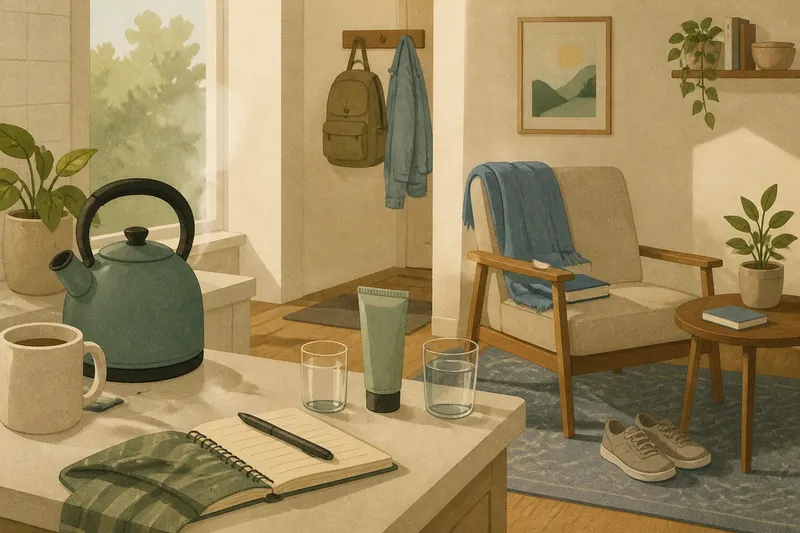
“I should stretch more” is an intention, but it does not say when to start. “After I put the kettle on, I stretch beside the counter” links stretching to a familiar event. The kettle is the cue; stretching is the response.
A cue does not force you through a routine. It helps you notice when the action could begin. Think of it like a bookmark: it marks a place to return to without asking you to start the whole book again.
A useful cue is specific enough to recognise. “In the morning” may include many changing activities. “When I place my mug on the desk” points to a particular moment. Choose a cue that belongs to your actual day, not an idealised schedule.
Choose an event, object or place you already notice
Look for a recurring event before building a new reminder system. Possible cues include closing a laptop, taking off outdoor shoes, washing a cup, feeding a pet or arriving home. A location can work too, such as the chair where you regularly sit to read.
- Event cue: “After I brush my teeth, I apply hand cream.” The familiar action marks a transition.
- Object cue: “When I see my book beside the bed, I read a page.” The book makes the intended action visible.
- Place cue: “When I sit at the table, I open my notebook.” The location is also where the action can happen.
Check how the cue fits your day before settling on it:
- If the event happens regularly and you can act soon afterwards, use it; if it is unpredictable, choose a more familiar event or a visible object.
- If the object stays where you need it, keep it there; if it is often moved or hidden, relocate it or choose a place-based cue.
- If the location is usually available, link the habit to it; if other people often occupy it, choose another workable location.
- If the cue occurs during a rush, select a calmer transition; if no calm moment is available, make the action shorter or choose a different time or event.
- If the cue and action can happen close together, keep the pairing; if you must gather several things first, move the materials nearer or select a different cue.
- If the cue still catches your attention, keep it; if it has faded into the background, move it to a place where the action is practical rather than adding reminders everywhere.
Make the response small enough to start
A cue can identify a moment, but it cannot make an oversized task feel manageable. If “after lunch” leads to “prepare an elaborate meal”, the obstacle may be the task rather than the reminder. Choose a first action that fits the moment, such as filling a glass of water, opening a notebook or putting walking shoes by the door.
Say you want to read in the evening but often forget once you sit down. You choose the chair where you unwind as the cue and place a book on its arm. The steps are to sit in the chair, notice the book and read a page. The observable result is whether the book is in view and easy to open when you settle there. If the chair is often occupied or the book gets moved, the result points to a different location or cue, not a need for self-criticism.
Keep the intended action modest while you see whether the pairing suits you. You can continue when it feels natural, but the cue need not become a demand for a full session.
Check whether the cue still fits when the day changes
Travel, visitors, a changed workday and forgetfulness can interrupt routines. A cue tied to an exact clock time may become awkward when your schedule shifts. An event-based cue, such as making your first drink at home, can move with the day.
That does not make event cues automatically better. An event that is irregular, hard to notice or usually followed by a rush may be a poor fit. Ask whether you encounter it, whether the habit can happen nearby and whether the action makes sense at that point in your day.
A notebook on the table, a packed bag beside the door or hand cream near the sink can make an intended action easier to notice. If an object becomes part of the background, move it to a practical spot instead of filling the room with extra prompts. For personal-care products, follow the label and the manufacturer’s directions.
Which habit cue should you choose?
Should a habit cue be a time or an event?
Choose a time if your schedule is steady and the action fits that moment. Choose an event if your day shifts but a familiar action still marks a useful opening.
Can one cue prompt more than one habit?
It can, but several actions may crowd the same moment. Begin with one clear response; if it remains easy to notice and start, you can consider adding another.
What if I notice the cue but still do nothing?
Check whether the action is too large, inconvenient or poorly matched to that moment. Make the first action smaller, move needed materials closer or choose a cue where the habit can happen.
Do phone reminders count as habit cues?
Yes, if an alert arrives at a useful moment and names a specific action. If you dismiss it during a meeting or it regularly appears at the wrong time, change its timing or wording, or try a cue already built into your day.
Change the arrangement when the routine stalls
If the habit repeatedly fails to begin, treat that as information about its setup. The cue may be hidden, the action may need more preparation than expected, or the chosen moment may already be full. Change one part and notice whether the next opportunity is easier to act on; a missed prompt alone does not tell you anything about your character.
State the link in a short sentence: “When I do this, I will do that.” Make it concrete enough to picture, then put the materials within reach. For a habit involving personal care or a product, use it according to its label and directions rather than changing how you use it to fit the cue.
A habit cue is an invitation, not a promise that every day will go to plan. Choose one recurring moment, pair it with a manageable action and adjust the arrangement when your day changes. When you review the pairing, ask whether the cue was visible, the action was possible and the moment made sense; those answers give you a practical next change.