From Rest Cure to Rest Day: How Rest Became a Wellness Word
Learn how “rest” shifts from an imposed rule to a flexible break or product claim, so you can identify what a schedule, message or advert is asking of you.
What does “rest” ask you to do when you see it on a training plan, a workplace notice or a product label? The meaning of rest depends on who is using the word and what they expect you to stop, start or feel. From the historical phrase “rest cure” to today’s “rest day”, the same word can describe very different expectations.
Wellness language can present one person’s preference as though it were a universal need. Rather than searching for one definition that fits every situation, ask what kind of rest is being proposed, who gets to choose it and what the word is doing in that context.
Read the context around the word rest
Start by identifying where the word appears. A note in a training plan, a workplace policy, an advert and a friend’s message may use “rest” but carry different expectations.
- In a schedule: If “rest” means time without a planned task, then check whether the schedule also limits ordinary activities; if it does, clarify what is excluded, and if it does not, treat the term as a broad pause.
- In exercise advice: If a rest day excludes a particular workout, then decide whether that is the break you want; if the wording is unclear, ask which activities remain in the plan.
- In a product claim: If an advert names a specific feature, then assess that feature on its own terms; if “restful” is not explained, treat it as a suggested feeling rather than a clear description.
- In a rule or instruction: If someone else has set limits on activity, then ask what the limits cover and who chose them; if the instruction concerns health or treatment, seek clarification from a qualified professional.
- In a conversation: If someone says they need rest, then ask what they want to pause; if they already name a boundary, respect that rather than adding your own interpretation.
- In a calendar: If “rest” marks an open block, then decide whether to keep it unplanned; if it includes an appointment or task, rename the entry so its purpose is clear.
Look for the surrounding verbs. Does the message say to lie down, stop training, take leave, reduce demands or buy something? These actions are not interchangeable. Rest is like a coat: the word is familiar, but the fit depends on the conditions and the person wearing it.
The rest cure framed rest as a prescription
The phrase “rest cure” is associated with a historical approach in which an authority could prescribe rest as treatment. The label alone does not describe one uniform regimen, and the details depend on the particular account. For this article’s purpose, the important distinction is modest: rest could be presented as something directed by someone else, rather than chosen by the person asked to follow it.
That history is not a template for modern self-care. It helps explain why “rest” can sound comforting to one person and controlling to another. Being told to stop work may feel welcome when demands are overwhelming; being ordered to withdraw from useful activity may feel restrictive. The word alone cannot tell you which experience is intended.
Notice who gets to make decisions. Ask whether the person being urged to rest has a say in how the suggestion is understood and what activities it covers. If the message treats their judgement as irrelevant, it may be doing more than offering care.
A rest cure and a rest day carry different expectations
“Rest day” often appears in exercise schedules to describe a planned break from a particular training routine. It does not automatically mean staying in bed, avoiding every errand or feeling refreshed by evening. Check what the plan means by the term instead of assuming it applies to every kind of activity.
The contrast is not simply old versus new. Both terms can carry authority: one may prescribe inactivity, while another can turn recovery into a rule to follow. A rest day may be flexible, or it may become another item to perform correctly. Context and choice still matter.
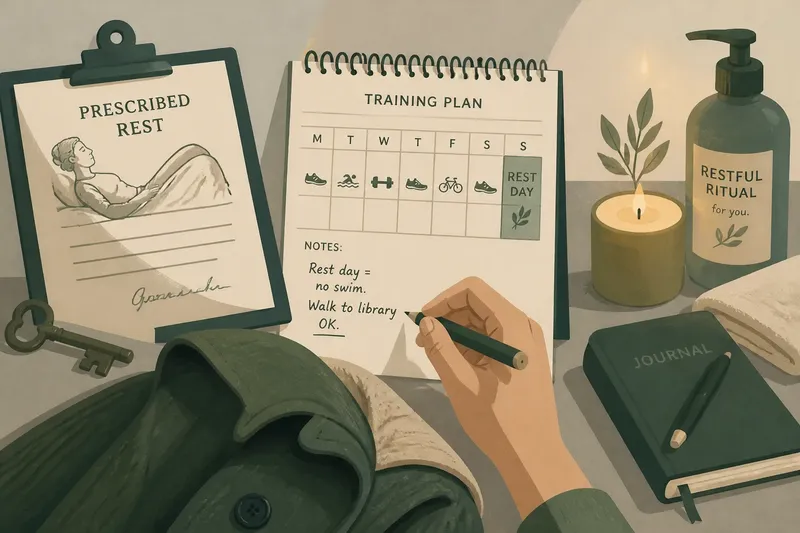
Say you have a recreational swim pencilled in after a demanding week, and your plan marks Sunday as a rest day. You would also enjoy an unhurried walk to the library. If you interpret the note as a break from swimming, you can remove the swim while keeping the walk as your choice; if the plan means a broader pause, you can ask its writer to clarify before deciding. The observable result is a schedule that states which activity is paused, rather than leaving “rest” to imply a rule about everything.
This distinction helps when people disagree about what rest “should” look like. One person may want quiet and fewer demands; another may prefer gentle, self-chosen activity. Neither preference defines the word for everyone.
Separate wellness promises from specific actions
“Rest” is also used in advertising and everyday advice. It may be attached to a bath product, a sleep accessory, a retreat or a routine. The word can point towards an aim, such as making time less demanding, but it can also lend a reassuring tone to a purchase or tightly managed practice.
When a message promises rest, separate the stated action from the suggested result. A scented candle can add fragrance to a room; that does not define whether someone feels rested. A journal can invite reflection, but the promise of a restful life is broader than the object. Ask what is offered in concrete terms and what the wording leaves vague.
Notice whether rest is described as something you must earn. Language that makes a break a reward for productivity can turn a pause into a prize. You can recognise that framing without judging someone who finds it motivating. Ask whether the message leaves room for a break before exhaustion or achievement becomes the condition for taking one.
What does rest mean in common situations?
Does a rest day mean I should do nothing?
Not necessarily. In a training schedule, the phrase may refer to a break from the planned workout, but the writer or coach may use it differently, so check which activities the plan excludes.
Is rest the same as sleep?
No. Sleep is one form of rest, while people also use “rest” for time away from work, training or other demands. A message using the broader word is not automatically making a specific claim about sleep.
Why can the word rest sound like an order?
It can carry the voice of a rule, schedule or authority figure, particularly when another person decides what you may do. Asking who set the expectation and whether you have a choice can clarify what the instruction means.
Can a product promise that I will feel rested?
A product can describe what it is designed to do, but a broad claim about how you will feel needs a concrete explanation. Look for the action or feature being offered rather than treating “rest” as a precise outcome.
Name the pause you actually mean
Before using the word for your own plans, name the boundary. “No swim session today” is clearer than “I need rest” if your intention is to pause training. “I’m keeping the evening free of work messages” describes a different limit. Specific wording helps another person understand what you are choosing.
If someone recommends rest, you can ask what they mean without dismissing the suggestion. They may mean a break from a particular activity, fewer obligations or an opportunity to be still. If the question concerns a health condition or treatment, ask a qualified health professional rather than treating a general wellness phrase as personalised advice.
When you next see “rest” in a schedule or sales message, read the surrounding words before accepting an implied instruction. The phrase “rest day” does not have to mean the same thing as “rest cure”; the setting, rules and speaker change what the word asks of you. Naming what you want to pause—and what you are free to keep doing—makes the choice clearer.