A Desk-Bound Afternoon, Re-set Around One Movement Break
One movement break can interrupt a desk-bound afternoon. Compare a standing pause, short walk and seated movement to choose what fits your work and comfort.
Which movement break fits an afternoon when you need to stay near your desk? A movement break can be a brief change of posture or place, not a workout target. Choose one that interrupts sitting without making the rest of your afternoon harder to manage.
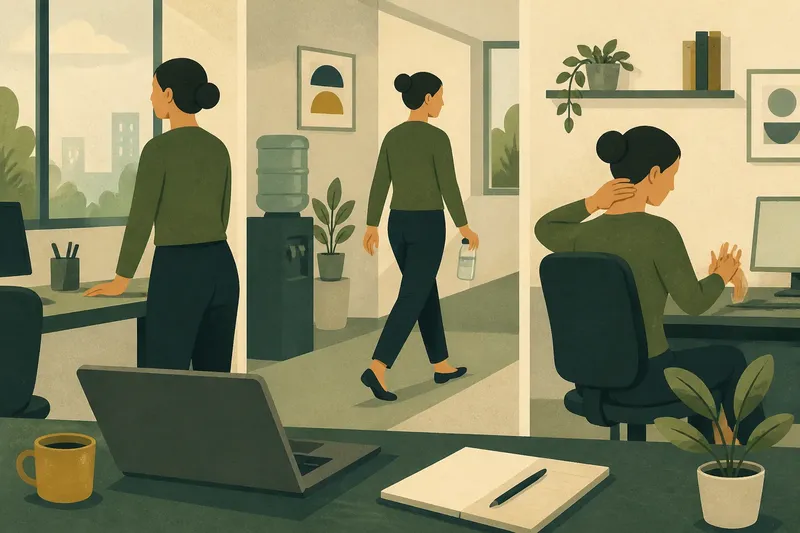
There is no single right kind of pause. You might stand beside your desk, walk a short route or move gently while seated. Consider what your work allows, what feels comfortable and whether you want a change of posture, scenery or pace.
Choose the interruption you need
Think of a movement break like opening a window: a small change can alter the feel of a room without turning it into somewhere else. A short pause can mark a boundary in a seated stretch without becoming a separate exercise session.
Before choosing, check these details and let each result guide your decision:
- Check whether you can leave your desk without losing track of a task. If you can, choose a short walk; if not, stand nearby or stay seated.
- Check whether standing feels comfortable. If it does, use a standing pause; if not, choose seated movement or another comfortable position.
- Check whether you have a clear, permitted route. If you do, walk for a change of scenery; if not, choose an option close to your desk.
- Check whether you need to remain available for a call or colleague. If you do, stay within reach; if not, consider stepping away briefly.
- Check whether your workspace has room to move safely and comfortably. If it does, stand beside the desk; if not, remain seated and change position gently.
- Check whether you want a new view or simply a pause from typing. If you want a new view and can leave, walk; if not, look away from the screen or move your hands gently.
Your answers point towards an option that fits this particular afternoon. They need not become a standing rule. A meeting-heavy day and a quiet day at home may call for different choices.
A standing reset keeps you close to work
Standing may suit a pause when you need to remain near your screen, phone or paperwork. Rise beside the desk, let your arms rest by your sides and look away from the screen. If it feels comfortable, shift your weight gently or roll your shoulders without forcing a stretch.
This option may fit when you are in the middle of a task, waiting for a file to load or working in a shared space where walking would be awkward. Your materials stay within reach, and you can return to them readily.
Standing is not automatically comfortable for everyone. If it brings discomfort or makes you feel unsteady, choose a seated pause or another position that feels manageable. The aim is to interrupt a settled posture, not to prove one position is better.
A short walk gives you a different view
A walk takes you away from the desk and offers a different view. You might refill a glass of water, collect a document from a printer or look out of a nearby window. The route matters less than whether stepping away fits your work.
This option may suit a gap between tasks or a workplace where a brief walk is permitted. It may be less convenient if you are on an active call, caring for someone nearby or working somewhere that makes leaving your station difficult. In that case, standing or moving gently in your chair may be more workable.
Keep the walk ordinary. It does not need a brisk pace or an errand. If leaving the desk adds pressure, choose a closer option instead.
Seated movement works in a small space
You can change position without standing. Settle back in your chair, let your shoulders soften and make a small, comfortable movement, such as opening and closing your hands or turning your head gently to look away from the screen. You might also place both feet on the floor and notice the support beneath them before returning to your task.
Seated movement may suit a compact workspace, a shared desk or a moment when standing is uncomfortable. If a movement feels awkward or uncomfortable, leave it out. A quieter change of position can still interrupt the usual posture.
Choose movements that feel ordinary and controlled. This is not a moment to test your flexibility or copy a demanding stretch from a video. If a health concern affects what movement is appropriate, ask a qualified health professional for advice suited to you.
Match the movement break to your afternoon
Say you are editing a document at home, your next call is soon and you do not want to leave the desk. You stand beside the chair, let your arms rest and look through the window, then sit again when you are ready to continue. The observable result is that your posture and view have changed, while your task remains close at hand.
Imagine instead that you are between calls in a quiet office, with a clear route to the water cooler. You want a change of place, so you walk there and return to your desk. If you are sharing a compact desk or cannot leave your station, seated movement may fit better. These are choices, not tests of discipline.
Choose the smallest option that answers your need:
- Choose standing if you want to change posture but stay close to work.
- Choose walking if you want a new view and can leave your desk without creating a problem.
- Choose seated movement if space, access or comfort makes the other options less suitable.
There is no need to combine every option. One clear interruption is easier to fit into a busy afternoon than a routine that requires planning, equipment or a special place.
Questions about choosing a movement break
How long should a movement break last?
There is no fixed duration that suits every afternoon. Let the available gap and your comfort guide you, then stop when the pause has done what you wanted it to do.
Does a movement break need to count as exercise?
No. A brief change of posture or place can serve as a break without meeting a workout target. Treat exercise as a separate choice, not a requirement for pausing.
What if I cannot leave my desk?
Stay seated and make a small, comfortable change, or stand beside the desk if that suits you. If neither feels right, pause your hands and look away from the screen before continuing.
Should I repeat the same movement every afternoon?
You can, but you do not have to. Let the task, available space and your comfort shape the choice; changing the option does not mean you have failed to keep a routine.
Make it easy to return to your task
A useful movement break has a clear stopping point. You might return after standing beside the desk, reaching the water cooler or settling into a comfortable seated position. There is no need to track it or judge its value by how much effort it involved.
For a desk-bound afternoon, choose a movement break that fits the interruption you need: a close-by stand, a short walk or gentle seated movement. Treat the choice as adjustable. If the next afternoon brings a different task or a different level of comfort, a different pause may fit better.